DOXAcademia featured at St. Stanislaus Polish Festival!
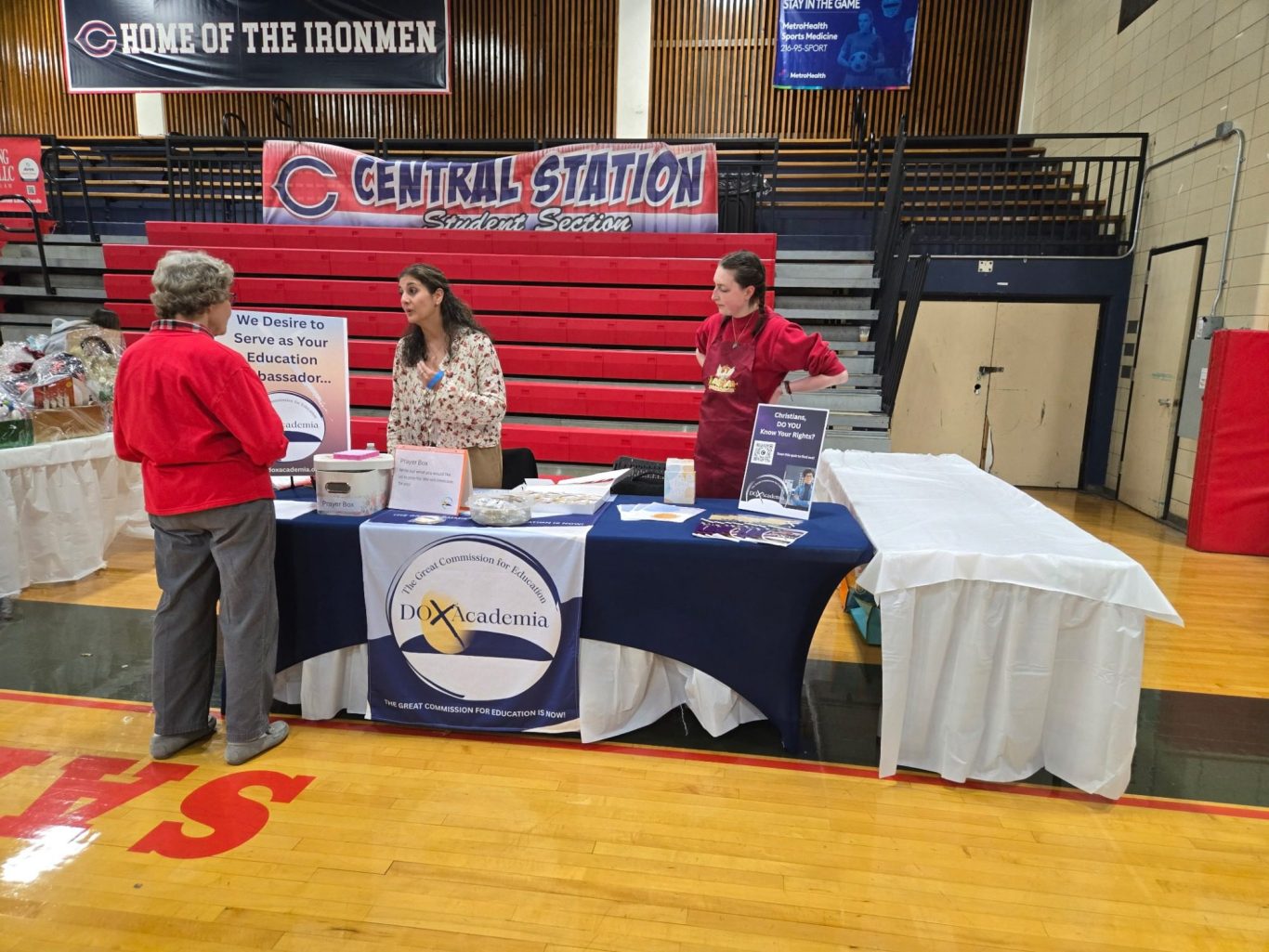
On Oct. 3 and 4th, Rania Assily, Grace Istenes, and Paloma Smith, sponsored a table at the St. Stanislaus Polish festival for DOXAcademia. A variety of people stopped by the table to listen to the organizational mission, share their thoughts on the conditions in education and give prayers in the prayer box. We gained many supporters on our sign-in list and plan to follow up with them in the coming days and weeks!

August 2026
DOXAcademia partners with Ohio Charity Foundation for Padre Pio Academy's First Staff Retreat
Unless you are a teacher or staff member working in an educational setting, it is hard to imagine the everyday ins and outs of a typical day of teaching children.
Parents are giving their children to those they trust the most, the teachers. And while teachers graciously take on the challenge to meet the needs of their pupils, once the school year starts, they seldom have time to breathe, take a step back and reflect on their role as teachers and catechists.
On Tuesday, Aug. 11, 2026, Padre Pio teachers and staff were welcomed to the Loyola Retreat House for exactly what they needed, time for prayer, reflection, and edification in their role as teachers and catechists. The theme of the retreat was "Our Identity In Christ" and participants each received a copy of Thomas a Kempis's book "The Imitation of Christ" for meditations.
DOXAcademia was honored to help Padre Pio Academy achieve their goal and will continue to support schools who wish to invest in their faculty for the good of the pupils and for the glory of God!
Testimonials from participants:
Thank you so much Rania DOXAcademia for providing this time of reflection and prayer to us. We live in such a busy world, that sometimes we forget to slow down and focus on what truly matters. But with your help, we had a wonderful day of spiritual renewal. Thank you.
The staff retreat hosted in partnership with DOXAcademia was a peaceful time to reflect on our mission as Christian educators as we looked towards the beginning of the new school year. I felt very nourished by opportunities throughout the day for personal reflection and growth in my faith, and I appreciated the insights and encouragement offered on how to foster an authentically Christian spirit within the classroom.
Rania was terrific! Her topic of Spiritual Warfare was interesting and informative. I found her to be completely sincere, relatable and delightful. She not only gave us helpful and necessary information regarding Spiritual Warfare from a Catholic perspective, but she also shared personal struggles and triumphs in her own real life Spiritual Warfare battles. At times we forget that EVERYONE goes through "rough patches" at various points in our lives.
I truly cherished my time at the PPA DOXAcademia retreat! The sessions were poignant and allowed me to quiet myself in order to learn, reflect, and apply lessons towards being a better “imitation of Christ” to our students and families. I look forward to the start of the school year to put these lessons in action!
Starting the school year in prayer, renewed by the sacrament of Confession, and centered in Christ is every Catholic teachers dream. Thank you!

Can We Be Christian Teachers Working Amidst Secular Culture?
By Paloma Ramirez, Clinical Psychologist and Therapist
Sept. 2026
Let us raise a question about a common problem present in all public schools, and even in some Christian ones: The rule of secularism.
Exploring this phenomenon, one can easily encounter cliché phrases like “We have to respect everyone’s faith expressions”, “act professionally,” or “don’t be biased”. What does this truly mean? “Do not create conflict; it is uncomfortable; we don’t want to confront anyone; let everyone live in their own bubbles”. It seems that there is an intentional secular movement to keep us passive, relative, mild, warm... they want us to “love everyone above everything”. This might sound correct right away, but we, as Christians, aren’t called to do that; we are called to love God above anything and anyone. To hide or deny the truth is, certainly, to lie. If we truly love God, then we will obey Him; we will proclaim and bless His name. And if we truly love our neighbors, then by this same love we must tell them the truth instead of hiding it,
sugarcoating it...etc.
What this secular requirement asks of us is to lie, but how can one pretend to be different than who we are? The question is not whether you can or cannot, but how can you betray your faith and morals? Is it because of the fear of losing our jobs, is it the fear of being labeled as extremists, crazy, out of touch? Is it our pride? Fear of being humiliated?
Although we might be full of eagerness to evangelize and try to save souls, we must admit there is difficulty in certain contexts that could lead us to commit a mistake or even a sin.
For example, confronting people without patience and letting ourselves be controlled by the pride of being right. For this, we need to mention the virtue of prudence. It is indeed one
of the most needed virtues. Prudence, according to St. Thomas Aquinas, is the right reason applied to action. This is the part where most of us think it is just pointless to go any further, since if we had this virtue, all developed, we would be perfect. Let ́s all remember
Jesus called us to be perfect like His Father in heaven is. Therefore, we need to exercise it always.
Prudence is a virtue that is built throughout our whole earthly lives, with consistency, meditation, and daily consecration. To be so, first we must have the intention to surrender all that we are to Our Lord (in liberty, memory, understanding and whole will) and stop looking for worldly pleasures. Secondarily, we need to dedicate a daily space for silence, so we can listen to what God want to tell us. How many of us make an effort to do so?
Different saints will recommend 15 to 30 minutes; can we spare this time for Our Master who gave himself for the remission of our sins? For the rest, God will lead you to higher levels of spirituality if you accept to do so.
We cannot live in fear; this leaves us paralyzed and left as easy prey for the devil. Call the Paraclete, our Advocate, and ask for the gift of fortitude. There is only one truth, one way,
one God. We can’t be silenced; we can’t lie. With this, hopefully, we will embrace the challenges we may encounter in our workplace as Christian teachers. Let our hearts say:
Christus regnant, Christus imperat, Christus vincit! (Christ reigns, Christ commands, Christ conquers!)
Join our mailing list today and receive a 5-week cycle Faith First Lesson Planner: The Virtue Integration Template!